
Benefits of spirulina
Spirulina is a microalgae valued for its nutritional density: in a small volume it concentrates plant proteins, iron, vitamins, trace elements and natural pigments. It is not a medicine, but a food that can complement a varied and balanced diet.
Why is spirulina valued nutritionally?
Because it is naturally nutrient-dense. In a small daily amount, it provides complete proteins, iron, B-group vitamins, provitamin A and various minerals and trace elements.
Rich in protein
A natural source of plant protein
Spirulina is naturally rich in protein: on average, protein accounts for 60 to 70 % of its weight. It contains the essential amino acids usually found in foods of animal origin, which makes it a valuable complement to a plant-based diet. Proteins contribute to the maintenance and growth of muscle mass, as well as to the maintenance of normal bones.
Spirulina and iron
Spirulina naturally contains iron
To improve its absorption, it is often combined with a source of vitamin C (citrus juice, for example). Iron contributes to the normal transport of oxygen in the blood, to a normal energy-yielding metabolism, to the reduction of tiredness and fatigue and to normal cognitive function.
Provitamin A (beta-carotene)
The orange pigment, a natural precursor of vitamin A
Vitamin A contributes to the maintenance of normal skin and mucous membranes, to normal vision and to the normal function of the immune system.
Magnesium
Spirulina contains magnesium
Magnesium contributes to the reduction of tiredness and fatigue and to normal muscle function.
B vitamins
Spirulina provides several B vitamins.
Vitamins B2, B6 and B12 contribute to the reduction of tiredness and fatigue and to the normal function of the nervous system.
Zinc, selenium, copper and manganese
Spirulina contains these trace elements.
Zinc, selenium, copper and manganese contribute to the protection of cells from oxidative stress.
What is spirulina?
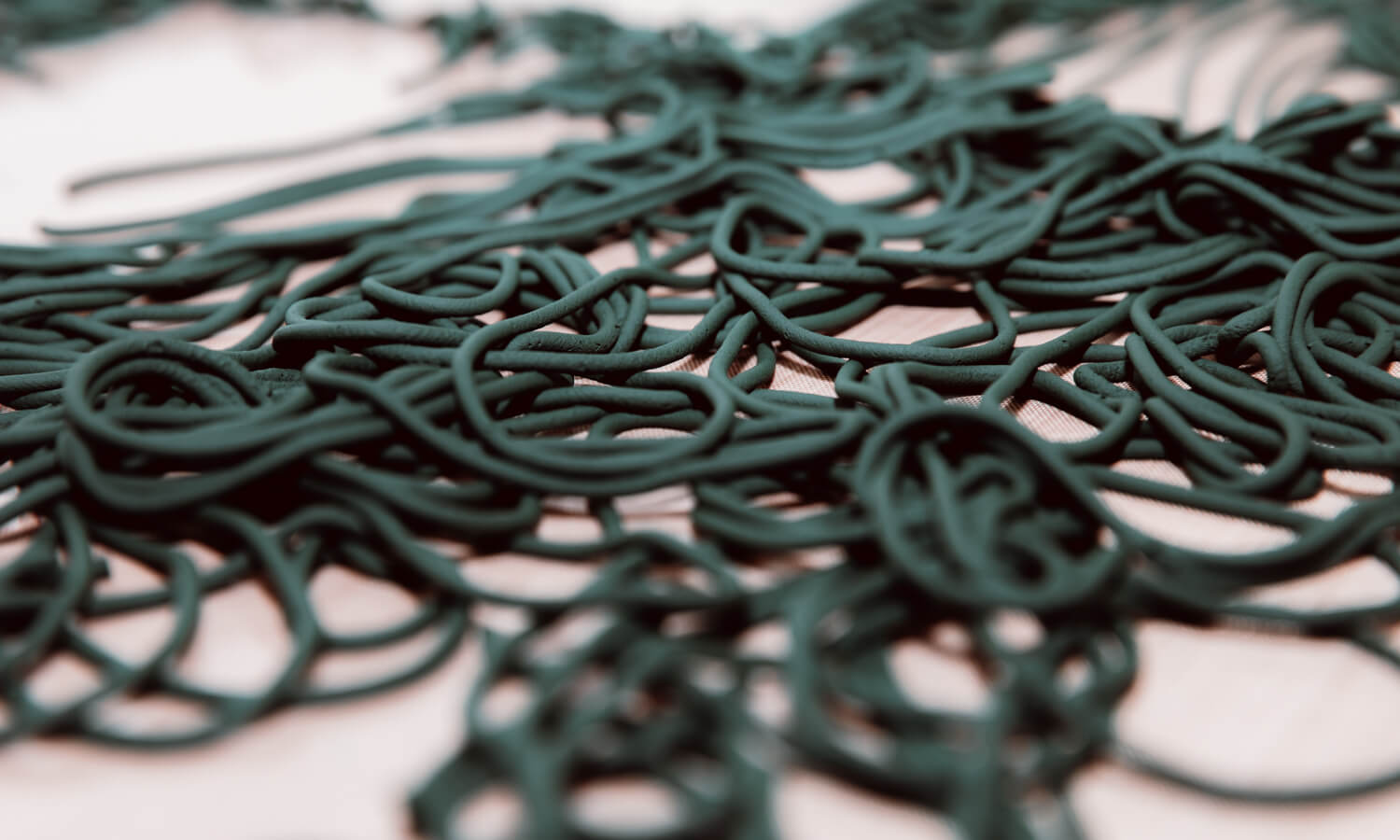
Spirulina is a freshwater microalgae (a cyanobacterium) that grows through photosynthesis, like a plant. Eaten for a long time in several parts of the world, it is today regarded as a nutrient-rich food.
At Spiruline-Valais, it is offered as flakes dried at a low temperature, at around 40 °C. This gentle process preserves its colour, its taste and its nutritional characteristics as well as possible.
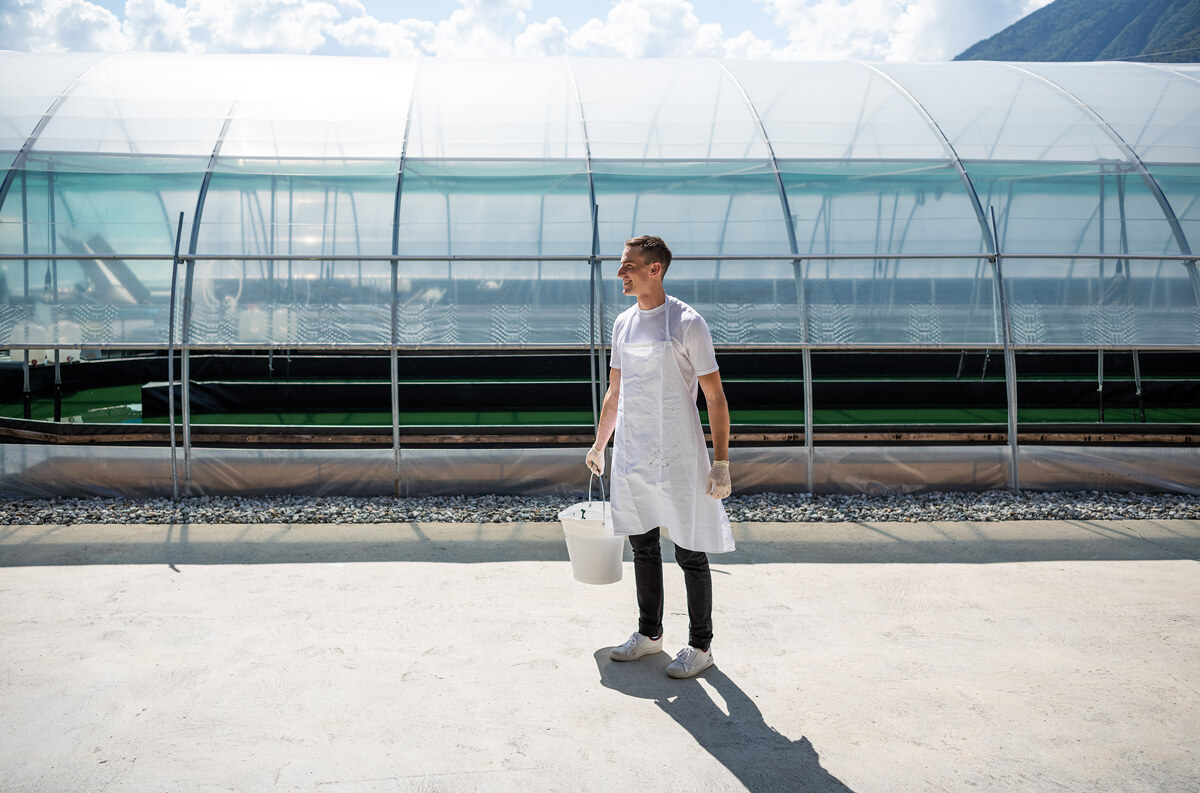
Our spirulina is grown, harvested, dried and then packaged directly on the farm, in Saxon, in the canton of Valais. This local, artisanal production guarantees complete traceability, from cultivation through to direct sale by the producer.
Spirulina grown locally in Valais
Our spirulina is produced in Saxon, in Valais, by Plein’R Sàrl (Robin Dorsaz and his team). It is grown under greenhouse, without pesticides or GMOs, then harvested, dried at low temperature and packaged directly on the farm.
This short supply chain guarantees complete traceability and fresh spirulina, sold directly by the producer. That is what sets Spiruline-Valais apart: local, artisanal production mastered from start to finish.
Discover our production
How to take spirulina?
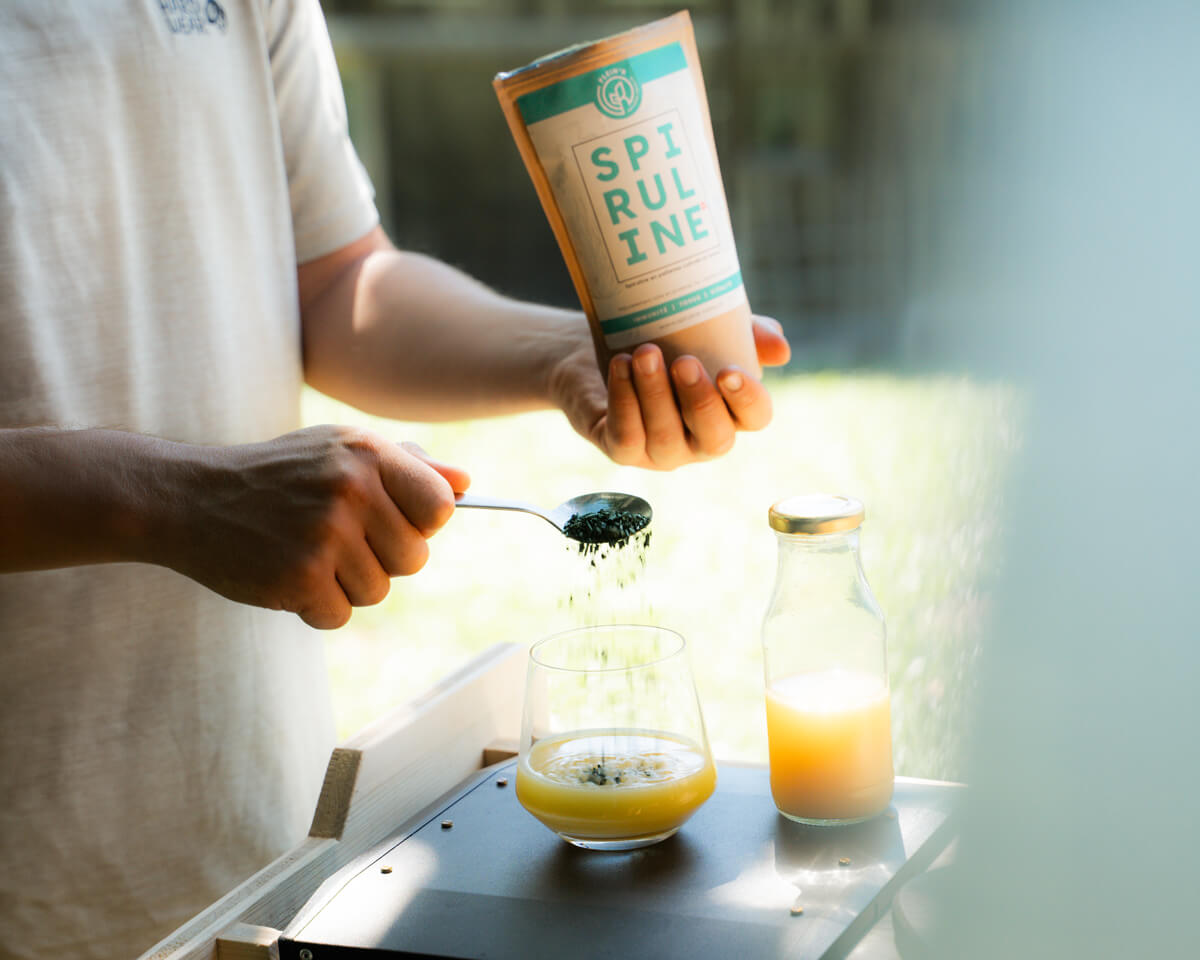
In practice, the usual dose is one teaspoon a day (3 to 5 g), preferably in the morning. The flakes can be sprinkled over a dish or a salad, mixed into a juice, a yoghurt or a smoothie, or swallowed with a glass of water. Avoid cooking them: heat degrades some nutrients.
For everything about dosage, when to take it and recipe ideas, see our dedicated page: How to take spirulina?
Buy spirulina
Spirulina FAQ
Wondering how to take spirulina, how much to take, or in which situations it can complement your diet? Here you will find the answers to the most frequently asked questions.
What are the benefits of spirulina?
Spirulina is a naturally nutrient-dense food: complete plant proteins, iron, provitamin A,
B-group vitamins and natural pigments. It complements a varied and balanced diet. It is not a
medicine: it is not intended to treat or prevent any disease.
Does spirulina contain protein?
Yes. Spirulina is naturally rich in protein: on average, protein accounts for 60 to 70 % of its weight, and
includes the essential amino acids. That is what makes it a valued complement in a plant-based diet.
Is spirulina rich in iron?
Spirulina naturally contains iron. As it is eaten in small amounts (3 to 5 g per day), its contribution per serving remains moderate: it complements a balanced diet. It is often combined with vitamin C to support iron absorption.
Is spirulina suitable for vegetarians?
Yes. It provides complete plant proteins and iron of plant origin, useful in a vegetarian or vegan diet.
Is spirulina of interest to athletes?
Spirulina appeals to many athletes for its high protein content and its nutritional density. It fits easily into a diet adapted to physical effort, but it accompanies a balanced intake rather than replacing it.
Can spirulina be taken every day?
Yes, spirulina is a food that can be eaten daily, generally at a rate of 3 to 5 g per day. Some situations do, however, call for medical advice.
Where is Spiruline-Valais produced?
Spiruline-Valais is produced in Saxon, in Valais (Switzerland), by Plein’R Sàrl (Robin Dorsaz and his team). It is grown under greenhouse, without pesticides or GMOs, then dried at low temperature and packaged directly on the farm, sold directly by the producer.
⚠️These statements are based on nutrient content or on preliminary studies. They do not constitute medical advice. If you have a specific need, consult a healthcare professional.
Want to discover Spiruline-Valais?
Grown in Saxon, harvested and then packaged directly on the farm, our spirulina flakes are available online.