
How should spirulina be consumed?
How much spirulina should you consume per day?
Spirulina is a food, so there is no precise dosage. The recommended daily amount of spirulina is one teaspoon, or 3 to 5 grams of spirulina flakes. The quantity can be doubled depending on personal experience and individual needs, particularly for athletes or vegetarians. Spirulina is preferably taken in the morning, at lunchtime or before physical activity for a quick energy boost.
Spirulina courses should be adapted according to each person’s experience and energy needs. Spirulina can be consumed all year round, taken in two-month courses, or used occasionally before the winter season, for example, or during periods of competition.
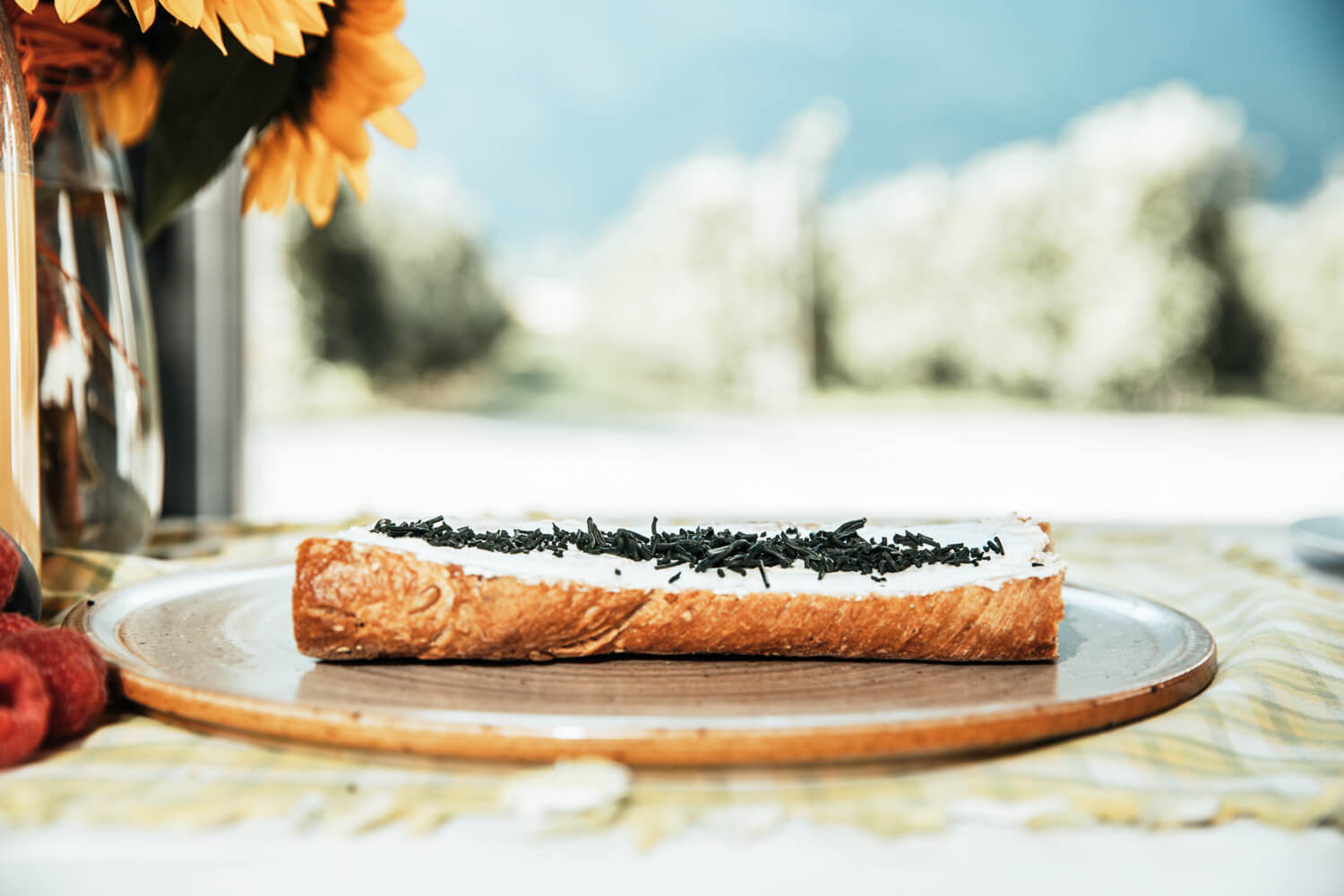
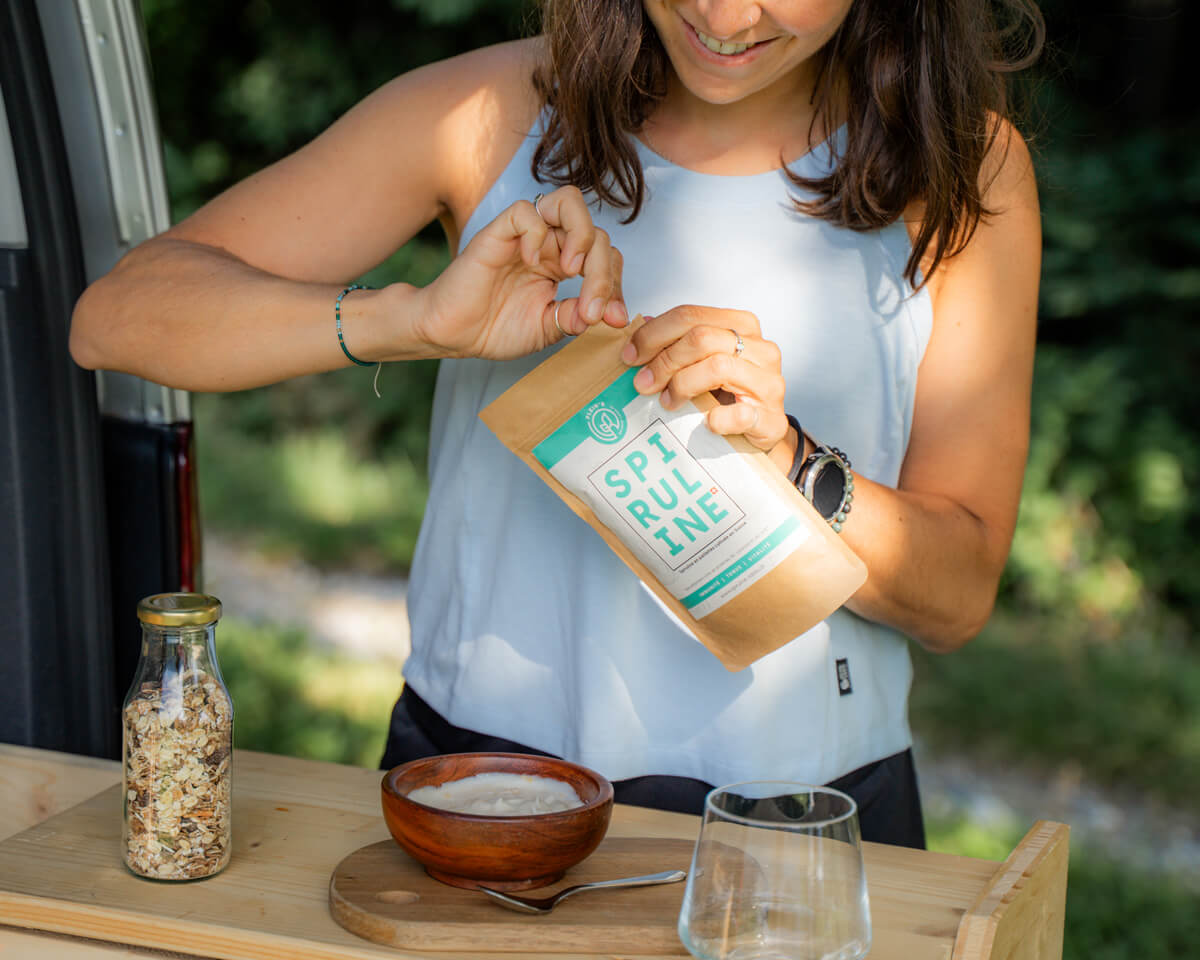
Ideas for consuming spirulina
Spirulina flakes can be used sprinkled on your dishes, mixed with a liquid (water, milk, fruit juice) or a yoghurt, bircher museli. Surprise yourself with its unique taste.
With fruit juice
Pour your spirulina into your juice or swallow the spirulina flakes (like a tablet) with your fruit juice.
In a smoothie
Pour your flakes directly into a blender with fruit or blend the spirulina first to obtain a powder to add to the smoothie. You can also soak the spirulina in water and then add it to your juice.
With a salad
Sprinkle the spirulina over a salad
With a yoghurt
Mix your spirulina flakes with yoghurt (it turns green). You can then add your choice of fruit, cereals, chocolate shavings, nuts for a very tasty breakfast.
On a slice of bread
Whether on sweet or savoury preparations, add your flakes of spirulina to your toast.
Frequently asked questions about consuming spirulina
Are you wondering how to consume spirulina, how much to take, or in which situations it can complement your diet? Find answers to the most frequently asked questions here.
How much spirulina should you consume per day?
Spirulina is a food, so there is no precise dosage. The recommended daily amount of spirulina is one teaspoon, or 3 to 5 grams of spirulina. The quantity can be doubled depending on personal experience and individual needs, particularly for athletes or vegetarians. Spirulina is preferably taken in the morning, at lunchtime or before physical activity for a quick energy boost.
Spirulina courses should be adapted according to each person’s experience and energy needs. Spirulina can be consumed all year round, taken in two-month courses, or used occasionally before the winter season, for example, or during periods of competition.
What is the best time of day to consume spirulina?
Spirulina can be consumed at the time that suits you best, for example in the morning, at breakfast, at lunchtime or before physical activity. The main thing is to choose a time that makes regular consumption easy and that suits your digestion.
How can spirulina flakes be consumed?
Spirulina flakes can be sprinkled over a salad, toast or a cold dish. They can also be mixed into yoghurt, bircher muesli, compote, fruit juice or a smoothie. To preserve their characteristics, it is preferable to avoid cooking them at high temperatures.
Can spirulina be consumed all year round?
Spirulina can be included regularly in the diet or consumed in courses lasting several weeks. Some people choose to consume it all year round, while others prefer occasional courses, for example before winter or during periods of intense physical activity.
Can spirulina be consumed during periods of tiredness?
Spirulina naturally contains various nutrients, including protein and iron. Depending on the composition of the product and the amount consumed, these nutrients may contribute to the normal functioning of the body. Persistent or unusual tiredness should nevertheless be discussed with a healthcare professional.
Is spirulina suitable for people who practise sport?
Spirulina can be included in an athlete’s diet because it naturally contains protein and various nutrients. However, it does not replace a suitable diet, sufficient hydration or adequate recovery.
Is spirulina suitable for vegetarians?
Spirulina is naturally rich in iron, protein and B vitamins, which are important nutrients in a vegetarian diet. It can help complement certain nutritional intakes when the diet contains little or no food of animal origin.
Its proteins contain all the essential amino acids. However, spirulina does not replace a varied and balanced diet and should not be considered a sufficient source of vitamin B12.
Can students consume spirulina during demanding periods?
Spirulina can be included in a balanced diet during periods of study, intensive work or stress. However, it does not replace sufficient sleep, a varied diet or medical advice in the event of significant tiredness.
Can spirulina be consumed as you get older?
Spirulina can be included in the diet at different ages. As nutritional needs change over time, it is advisable to seek advice from a healthcare professional in the event of medical treatment, chronic illness or a particular diet.
Are there any precautions or contraindications for consuming spirulina?
Spirulina may not be suitable in every situation. Medical advice is recommended in particular in cases of iron overload, kidney disease, anticoagulant treatment, chronic illness, pregnancy, breastfeeding or specific medical treatment.
This list is not exhaustive. If in doubt, seek advice from a healthcare professional.
Where is Spiruline-Valais produced?
Spiruline-Valais is cultivated in Saxon, in the canton of Valais, before being harvested and prepared directly by the producer.
How long does a 100 g bag of spirulina last?
At a daily intake of 3 grams, a 100 gram bag lasts approximately one month. The actual duration depends on the amount consumed each day.
⚠️Ces affirmations sont basées sur la teneur en nutriments ou des études préliminaires. Elles ne constituent pas un avis médical. En cas de besoin spécifique, consultez un professionnel de santé.