
Are you low on iron and wondering whether spirulina can help? Naturally rich in iron, spirulina can contribute to your dietary intake when it is part of a varied, balanced diet. It does not, however, replace medical care when an iron deficiency or anaemia has been diagnosed. Let’s look concretely at what spirulina offers on the iron front, how to add it easily to your meals, and why a Swiss spirulina grown in Valais can make a difference.
ℹ️ Good to know. This article is informational and does not replace medical advice. An iron deficiency or anaemia is confirmed by a blood test and treated with a health professional. Spirulina is a food: it complements your diet, it does not replace a prescribed treatment.
What is an iron deficiency?
Iron is an essential mineral: it helps transport oxygen in the blood, via haemoglobin, and contributes to the normal formation of red blood cells. We speak of an iron deficiency, or lack of iron, when intake or reserves are no longer enough to cover the body’s needs.
Several factors can favour it: an iron-poor diet, increased needs (pregnancy, growth, intense sport), greater losses (heavy periods) or reduced absorption. Persistent fatigue, paleness or breathlessness on exertion are sometimes mentioned, but these signs are not specific.
Iron deficiency and anaemia: what’s the difference?
The two are close but distinct. An iron deficiency means reserves (ferritin) are too low, without necessarily any visible effect: you can lack iron without being anaemic. Iron-deficiency anaemia is a more advanced stage, where the lack of iron eventually lowers haemoglobin and red blood cells. In both cases, it is a health professional, using a blood test, who makes the diagnosis and decides what to do.
Does spirulina contain iron?
Yes, and remarkably so. Spirulina is one of the most iron-concentrated plant foods. According to the average nutritional values of Spiruline-Valais spirulina, it provides around 48.8 mg of iron per 100 g, i.e. nearly 349% of the Nutrient Reference Values (NRV) per 100 g.
Put into a realistic serving, a daily 5 g portion provides around 2.4 mg of iron, i.e. nearly 17% of the NRV — a genuinely useful amount for such a simple food habit. This iron is non-haem iron, the form found in plants, as opposed to the haem iron of animal products.
A simple way to naturally enrich your diet with iron
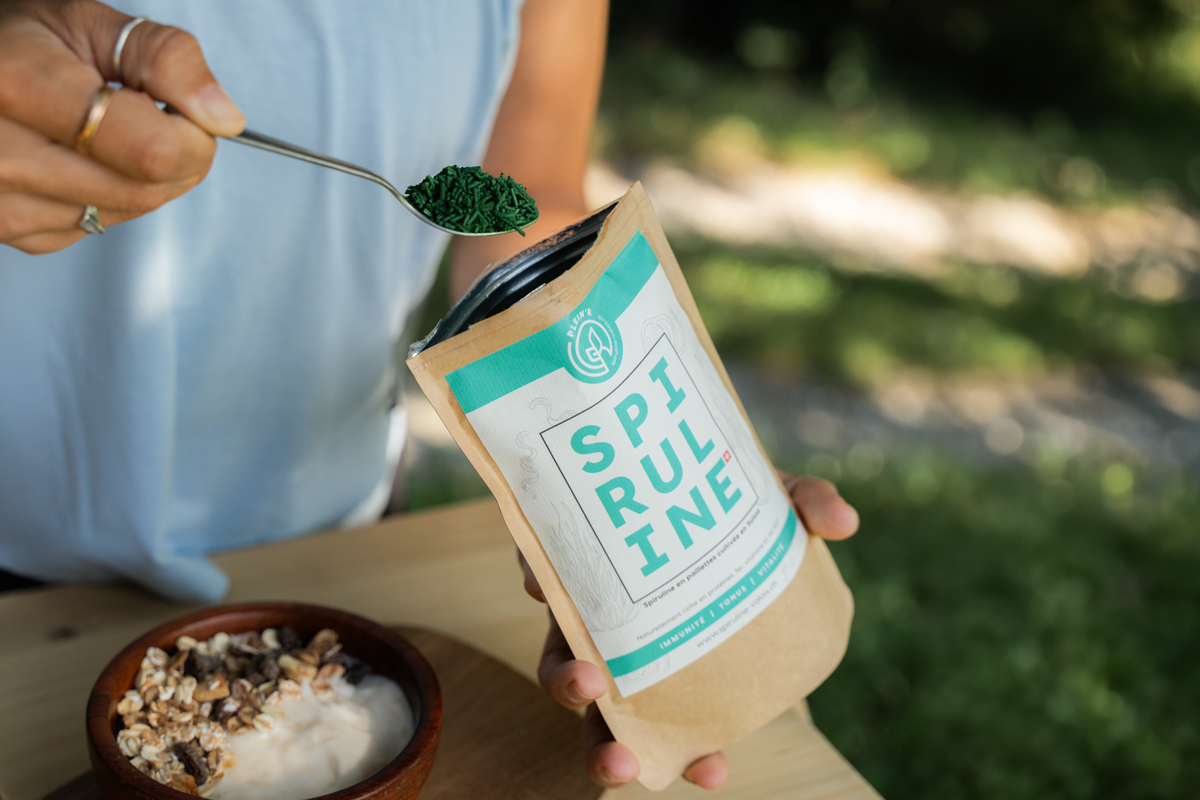
5 grams is barely a teaspoon: an amount that is easy to add every day without changing your habits. Sprinkled over a dish or stirred into a cold drink, spirulina flakes become a simple, tasty way to support your iron intake.
For people who watch their diet — athletes, vegetarians, vegans, or simply anyone eating a balanced diet — it is a practical food solution. Tip: pair it with a source of vitamin C (lemon, orange or kiwi juice) in the same meal to get the most from its iron. And because origin matters, choosing one grown locally in Saxon, in Valais, and sold directly by the producer means knowing exactly what you eat.
👉 Discover our Swiss spirulina, rich in iron
Iron, fatigue and immunity: which claims are authorised?
Because Spiruline-Valais spirulina is rich in iron, two officially authorised health claims can be associated with this mineral:
- iron contributes to the normal function of the immune system;
- iron contributes to the reduction of tiredness and fatigue.
These claims describe iron’s physiological role in the body. They do not mean that spirulina treats fatigue linked to an illness, a diagnosed deficiency or anaemia.
Can spirulina contribute to better iron intake?
Yes. Thanks to its high content, spirulina can make a valuable contribution to dietary iron intake and find a natural place in a diet that pays attention to this mineral. It is of particular interest to those who eat little animal-based iron.
Then there is absorption. Several studies suggest that the iron in spirulina has an interesting bioavailability compared with certain other plant sources; its absorption nonetheless varies from person to person and with the composition of the meal. In short: spirulina is a good everyday dietary ally for iron, but it does not replace a prescribed supplement when a deficiency has been diagnosed.
How to boost the absorption of the iron in spirulina?
Non-haem iron is generally less well absorbed than haem iron, but a few simple habits help you make the most of it. Vitamin C, eaten in the same meal (citrus, kiwi, peppers, parsley), promotes its absorption. Conversely, tea and coffee, rich in tannins, or large amounts of calcium, can hinder it: it is best to space them out from iron-rich meals. Absorption varies from one person to another, but these pairings remain good habits.
✅ In practice
- 5 g of spirulina provide around 2.4 mg of iron (nearly 17% of the NRV);
- pair it with a source of vitamin C;
- prefer it without strong cooking;
- space tea and coffee out from the meal;
- introduce it gradually into your habits.
How to use spirulina every day?
Spirulina flakes stand out for how easy they are to use: no preparation, just sprinkle. A few tasty ideas:
- a salad brightened with a squeeze of lemon;
- a yoghurt with red berries;
- a cold smoothie with kiwi or orange;
- a slice of bread topped with raw vegetables;
- a soup, slightly cooled after cooking;
- a cold pesto or sauce;
- a bowl or fresh cheese.
The habit to keep: avoid strong cooking to preserve its qualities. Want more ideas? Check our consumption tips.
Why choose a Swiss-grown spirulina?
Choosing a Swiss spirulina is above all a matter of trust. Spiruline-Valais spirulina is grown in Saxon, in Valais, and sold directly by the producer. It offers a clearly identifiable origin, traceable production and greater closeness to the producer: you know where and how it is produced. To go further, discover our production in Valais and the benefits of spirulina.
When should you see a health professional?
Fatigue that sets in or a suspected lack of iron deserve medical advice, especially during pregnancy, with heavy periods, a strict vegan diet or intense sport. A word of caution: do not start iron supplementation on your own, as excess iron is not harmless.
Frequently asked questions
Is spirulina rich in iron?
Yes. A 5 g portion provides around 2.4 mg of iron, nearly 17% of the NRV: spirulina is among the most iron-rich foods.
Can you take spirulina if you have anaemia?
Spirulina is not a treatment for anaemia. It can be part of your diet, but follow your doctor’s care.
Does spirulina replace an iron supplement?
No. It complements the diet; it does not replace a prescribed supplement.
How can you improve the absorption of the iron in spirulina?
Pair it with a source of vitamin C and space tea or coffee out from meals.
Can you eat spirulina every day?
Yes, within a balanced diet. During pregnancy or treatment, seek advice.
What are the possible signs of a lack of iron?
Fatigue, paleness or breathlessness may be associated, but are not specific: only a blood test confirms it.
How do you know if you really lack iron?
Through a blood test (ferritin, haemoglobin). Self-diagnosis is not reliable.
Why choose a Swiss-grown spirulina?
Spiruline-Valais spirulina is grown in Saxon, in Valais: identifiable origin, traceable production, direct sale and closeness to the producer.
In summary
Naturally rich in iron, Spiruline-Valais spirulina provides around 2.4 mg of iron per 5 g serving (nearly 17% of the NRV) and blends into your meals in one gesture. It contributes to your dietary iron intake, without replacing treatment when a deficiency has been diagnosed. Grown in Saxon, in Valais, and sold directly, it combines local quality with ease of use.
👉 Buy directly from the producer — or come and meet the producer.